
Hardwood Screening Battens: Choose Rough-Sawn or DAR?
05 November 2026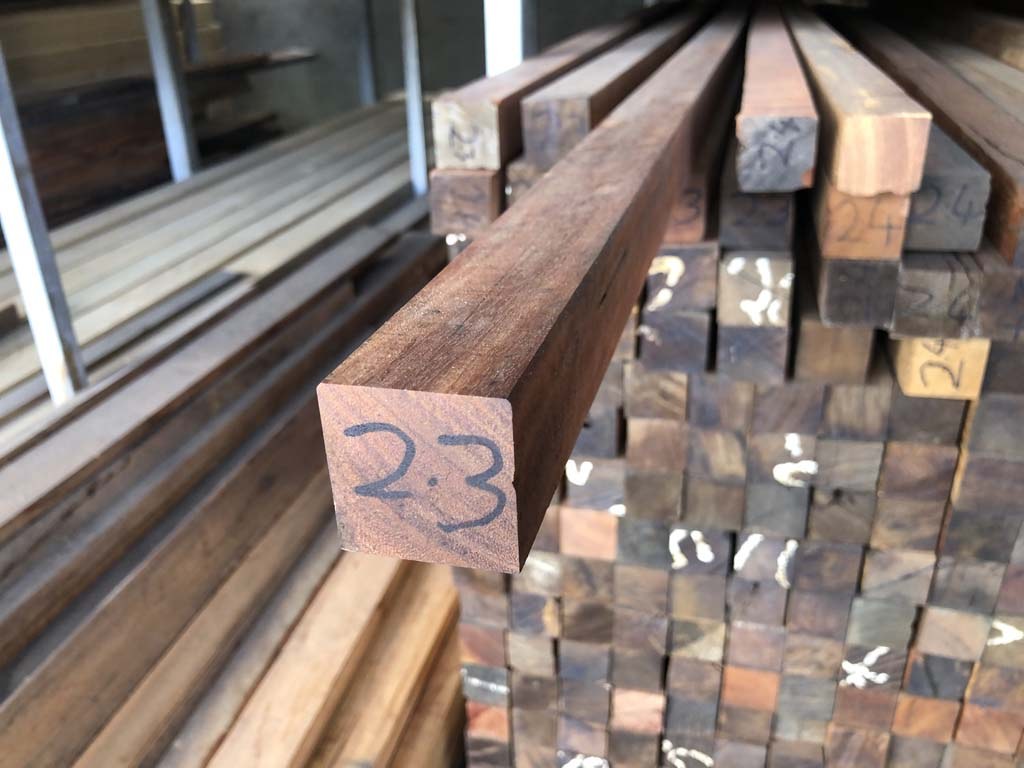
Compare rough-sawn and DAR hardwood screening battens in Melbourne with I Got Wood, covering finish, exposure, installation and suitable project use.
Choosing between rough-sawn and dressed hardwood is mainly a question of finish, consistency and exposure. At I Got Wood, we stock hardwood battens for fencing, screening and feature projects, including rough-sawn OB hardwood, Spotted Gum DAR and Tasmanian Oak DAR options.
Choose the Finish Around the Look and Location
Rough-sawn battens retain the textured surface left by sawing, giving fences and screens a more natural, rugged appearance. Our rough-sawn 50 x 50 mm hardwood battens are unseasoned and intended for feature fencing and similar applications. If left untreated, they will gradually grey as they weather.
DAR, or dressed all round, is machined on all four faces. The smoother, more regular finish makes it easier to create repeated gaps, clean shadow lines and a more architectural appearance.
For example, our Spotted Gum DAR 40 x 40 mm battens are suited to feature fencing and similar projects. Where a screen needs precise, consistent lines, DAR is generally the more practical starting point.
Compare Rough-Sawn and DAR Before Ordering
Surface finish is only part of the decision. Species, seasoning, dimensions, exposure and the intended application also affect what you should order.
- Surface character: Rough-sawn timber retains visible saw texture and natural variation, while DAR provides smoother faces and cleaner edges.
- Dimensional consistency: Unseasoned rough-sawn hardwood can move as it dries, so allowance may be needed for shrinkage and variation. Seasoned DAR is better suited where uniform spacing is important.
- Installation: Textured or variable battens may require more sorting and adjustment. Consistent DAR sections can simplify setting out repeated gaps.
- Weathering: Exterior hardwood changes colour with exposure. If retaining the original colour matters, choose an appropriate exterior finish and follow its maintenance requirements.
- Species suitability: Do not assume every hardwood performs the same outdoors. Species durability and exposure should be considered separately from whether the timber is rough-sawn or DAR.
Match the Timber Species to the Exposure
Spotted Gum is a useful option where natural durability and a dressed finish are priorities for exposed screening. WoodSolutions‘ timber durability guidance classifies Spotted Gum as Class 1 for above-ground natural durability, making it a strong candidate for suitable exterior applications when correctly detailed and maintained.
We also stock kiln-dried Tasmanian Oak DAR 40 x 40 mm battens for feature fencing, furniture making and similar projects. Tasmanian Oak has lower natural durability than Spotted Gum, so exposed applications need more careful consideration of detailing, coatings and maintenance.
For an outdoor screen, confirm the species and finish suit the exact level of weather exposure rather than selecting on appearance alone.
Order Battens for the Actual Project
Before buying hardwood screening battens Melbourne projects require, confirm the section size, available lengths, spacing, exposure and desired finish. Also decide whether natural weathering is acceptable or whether the timber will be coated and maintained.
The right timber depends on the look you want to achieve. Rough-sawn hardwood brings texture and character to rustic fences and landscape screens, while Spotted Gum DAR offers the clean edges and consistent sizing needed for more refined designs.
Explore our timber and fencing range or contact I Got Wood to discuss your project. Share your measurements, installation location and preferred finish, and we can help you compare suitable options.
Optimized by: Netwizard SEO